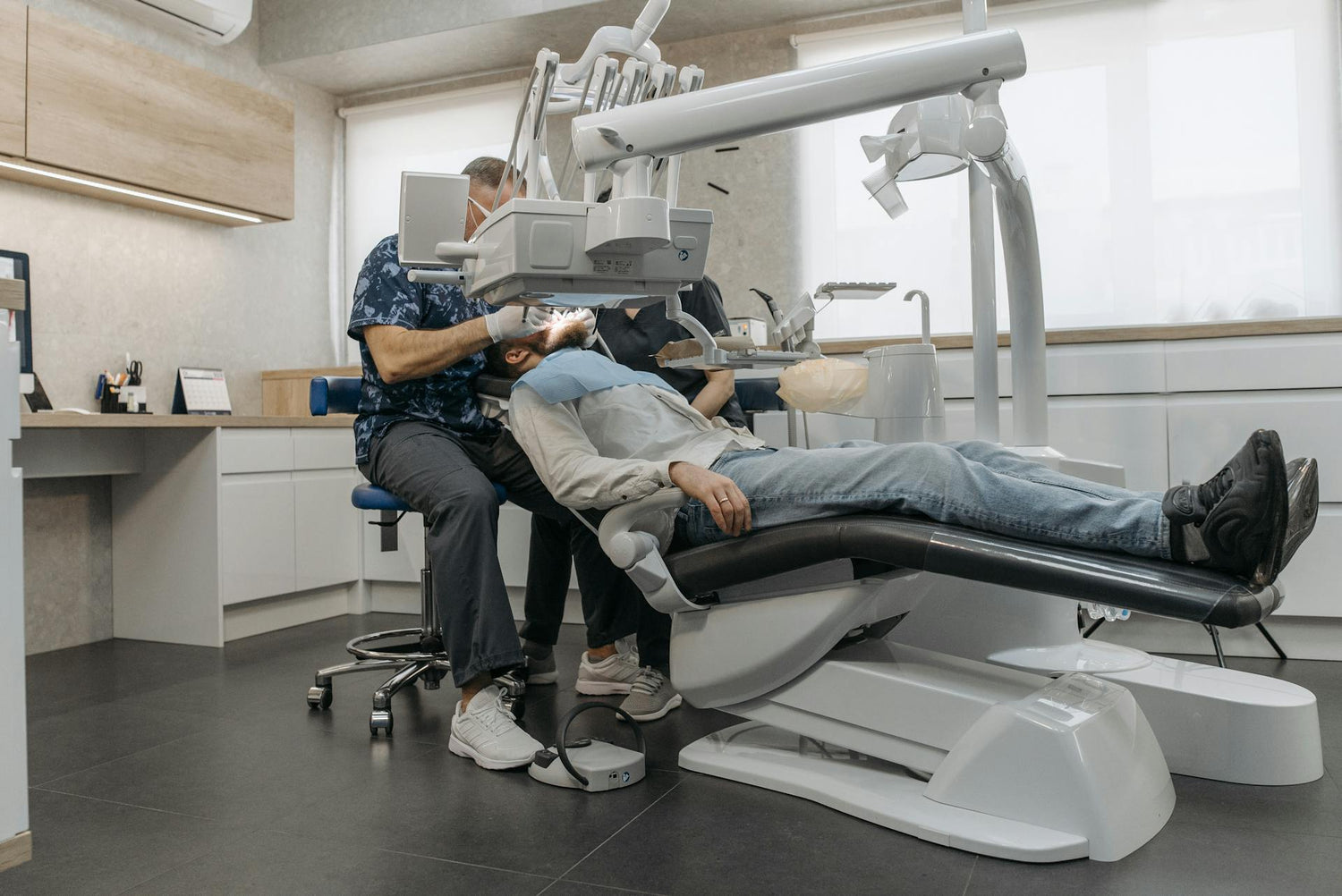
Pelvic tilt on a saddle stool can be the quiet difference between feeling tense and feeling more at ease during an extraction. For many dentists, extractions are when posture is pushed the hardest, with long periods of fine motor work, variable angles, and a constant urge to lean just a bit farther. Paying attention to how the pelvis sits on the saddle stool can help support your natural spinal curves and overall working comfort.
This article is intended for dentists and dental clinicians and offers general, non-medical information about ergonomic considerations. It is not medical advice, does not diagnose or treat any condition, and does not replace guidance from a qualified healthcare or ergonomic professional.
In this article, we will look at pelvic tilt in practical, non-technical terms and how it fits into your daily operatory routine. We will walk through setup before an extraction, small adjustments during different angles, and how to coordinate your position with your assistant and equipment. As a provider of dental supplies in Canada, we at ProNorth Medical have seen how a well-chosen saddle stool, used with pelvic awareness, can fit into a more ergonomic, confident approach to extractions.
Finding a Balanced Seat for Demanding Extractions
Extractions ask a lot of the operator. You may be stabilising the jaw, applying controlled force, managing visibility, and communicating with your assistant, all at once. When posture slips, hands often follow, which can affect how steady and relaxed your movements feel.
On a saddle stool, the pelvis can act as a steady anchor for the upper body. Instead of thinking only about your shoulders and neck, it can help to think about how your pelvis is tipping on the seat. This discussion is not a treatment for pain, a clinical recommendation, or a replacement for professional ergonomic or medical guidance. It is simply practical awareness that may help you consider how you work.
As a dental supplies provider in Canada, we focus on equipment that aligns with that kind of awareness. Ergonomic saddle stools in particular are designed to support an open hip angle and a more balanced pelvic position, so the rest of your spine has a better chance to sit in a natural curve while you work.
Why Pelvic Tilt Matters in Dental Operatory Ergonomics
In simple terms, a neutral pelvic tilt is when your pelvis is not tipping far forward or far back. On a saddle stool, that usually means you feel your weight sitting over the centre of the seat, with your lower back gently curved rather than flattened or excessively arched.
When the pelvis tips too far forward, the lower back may hollow and the ribs may flare. During an extraction, that can encourage you to lift your shoulders and crane your neck to reach the field. If the pelvis tips too far back, the lower back can collapse, which often leads to rounding through the upper back and pushing your head toward the patient.
That tilt shows up in everyday operatory challenges, such as:
- Reaching for instruments on a side tray,
- Leaning in for visibility on maxillary molars,
- Trying to keep a clear line of sight when the patient has a small opening.
If the pelvis is already off-centre, every extra reach or lean tends to start from a less stable base. Keeping tilt closer to neutral can offer a more consistent starting point for those movements, especially when combined with well-positioned sutures and accessories within easy reach.
Again, these are general ergonomic concepts for consideration only and are not medical or therapeutic recommendations.
Setting up the Saddle Stool Before an Extraction
Before a demanding extraction, it can be helpful to have a brief setup routine for the saddle stool. Height is usually the first variable. Many dentists report it as comfortable when:
- Hips sit slightly higher than the knees,
- Feet are flat and stable on the floor,
- The seat allows the pelvis to roll gently forward, without strain.
Next comes seat angle. Many saddle stools allow a small forward or backward tilt. Small changes can make a noticeable difference in how your pelvis feels:
- A slight forward angle may support an open hip position and help the pelvis rest closer to neutral.
- A small backward angle might feel better for some operators, as long as it does not encourage slumping.
Comfort should lead the way, not a rigid idea of “perfect” posture. These are general setup ideas; individual needs vary, and any specific concerns should be discussed with a qualified healthcare or ergonomic professional.
Finally, look at how your operatory layout supports that position. Consider:
- Distance to the patient’s mouth,
- Position of the instrument delivery units,
- Overhead or side lighting angles.
When those elements are set so you do not need to stretch or lean excessively, your saddle stool position can work more smoothly with your operatory rather than against it. Many dentists pair saddle seating with stable equipment, such as surgical staplers and instruments, to keep everything organised during complex procedures.
Maintaining Pelvic Control During Different Extraction Angles
Once you start working, your pelvic tilt will not stay fixed. It will make small, natural shifts as you move around different quadrants and tooth positions. The aim is to keep those shifts deliberate and subtle, instead of letting them drift into more extreme tilts.
For example:
- Maxillary posterior extractions may tempt you to arch your back and crane your neck. A gentle adjustment of seat height and a small anterior pelvic roll may help your line of sight without excessive spinal extension.
- Mandibular molar extractions sometimes lead to slumping forward. Bringing the stool slightly closer, lifting the seat a little, and resetting the pelvis toward neutral can reduce the tendency to fold from the mid-back.
Thinking of the pelvis as a base for micro-movements can be useful. Rather than repeatedly bending from the upper back or neck, you might try:
- Small rotations from the pelvis to change your angle,
- Tiny height adjustments of the stool for visibility,
- Repositioning the patient chair instead of twisting through the spine.
In scenarios like a long lower molar extraction or working around limited opening, brief pauses to reset your saddle position can support more consistent hand positioning and a steadier pace. These are general ergonomic strategies and are not a substitute for personalised ergonomic or medical advice.
Coordinating Pelvic Tilt with the Dental Team and Equipment
Your own posture does not exist in isolation. The assistant’s stool height, patient chair position, and instrument pass zones all influence how straightforward it is to keep a neutral pelvic tilt.
You might find it helpful to review with your assistant:
- A shared working height that keeps both of you closer to neutral,
- Clear pass points for instruments and suction, within your comfortable reach zone,
- Agreed signals when you need to pause and adjust chair or light.
When suction and retraction are organised so you do not need to twist from the pelvis or spine, your saddle stool can better provide a stable, responsive base. Thoughtful equipment choices, including ergonomic seating from a dental supply in Canada, can support that workflow and make these adjustments feel more natural.
Choosing the Right Saddle Stool Features for Your Practice
Not every saddle stool is the same, and different practices will prioritise different features. When you are comparing options, it can be useful to look at:
- Seat contour, single or divided designs, and how they feel across a typical day,
- Height and tilt adjustability, especially if multiple clinicians share a stool,
- Base stability, including wheel quality for smooth, controlled movement,
- Upholstery durability and cleanability for busy dental practices.
Body type and procedural profile also play a role. A clinician who spends most of the day on surgical extractions might value a wider height range and possibly a backrest, while a dentist with a mix of procedures may prefer a lighter stool that moves easily between operatories. Some operators appreciate accessories such as foot rings to support leg comfort at higher seating positions.
At ProNorth Medical, we focus on the ergonomic aspects of saddle seating, including resources such as our saddle stool information page. This sits alongside our broader collection of clinical tools and equipment designed for dental environments.
Putting Pelvic Awareness Into Daily Extraction Routines
Pelvic awareness does not need to be complicated. Many dentists find it helpful to build in short self-checks at predictable moments, such as:
- Before the patient is seated,
- Just before an incision,
- During longer procedures when they naturally pause.
These checks might be as simple as asking, “Are my hips higher than my knees, are my feet stable, and do I feel balanced on the saddle?” Keeping it focused on general ergonomics, rather than any medical or therapeutic claims, keeps the process practical and easy to repeat.
To turn this into a habit, some clinicians:
- Set small reminders on a watch or computer,
- Pair posture checks with routine tasks, like changing burs or adjusting the light,
- Reflect briefly at the end of the day on what felt comfortable and what did not.
Over time, these small, consistent adjustments in how you use a saddle stool may support a more stable, confident approach to extractions. If you have any pain, discomfort, or health concerns related to posture or seating, consult a qualified healthcare or ergonomic professional. As you review your seating and operatory layout, it can be helpful to consider how an ergonomic saddle stool and thoughtful pelvic positioning fit into the way you want to practise now and in the future.
Upgrade Your Operatory Comfort And Efficiency Today
If you are ready to improve ergonomics for you and your team, we invite you to explore our specialized saddle stools as part of your trusted dental supply in Canada. At ProNorth Medical, we focus on products that support better posture, reduce strain and help you work more comfortably through every procedure. Take a moment to review the options, compare features and choose the configuration that best fits your practice. We are here to support your decision with knowledgeable guidance so you can invest with confidence.

Leave a comment
This site is protected by hCaptcha and the hCaptcha Privacy Policy and Terms of Service apply.